
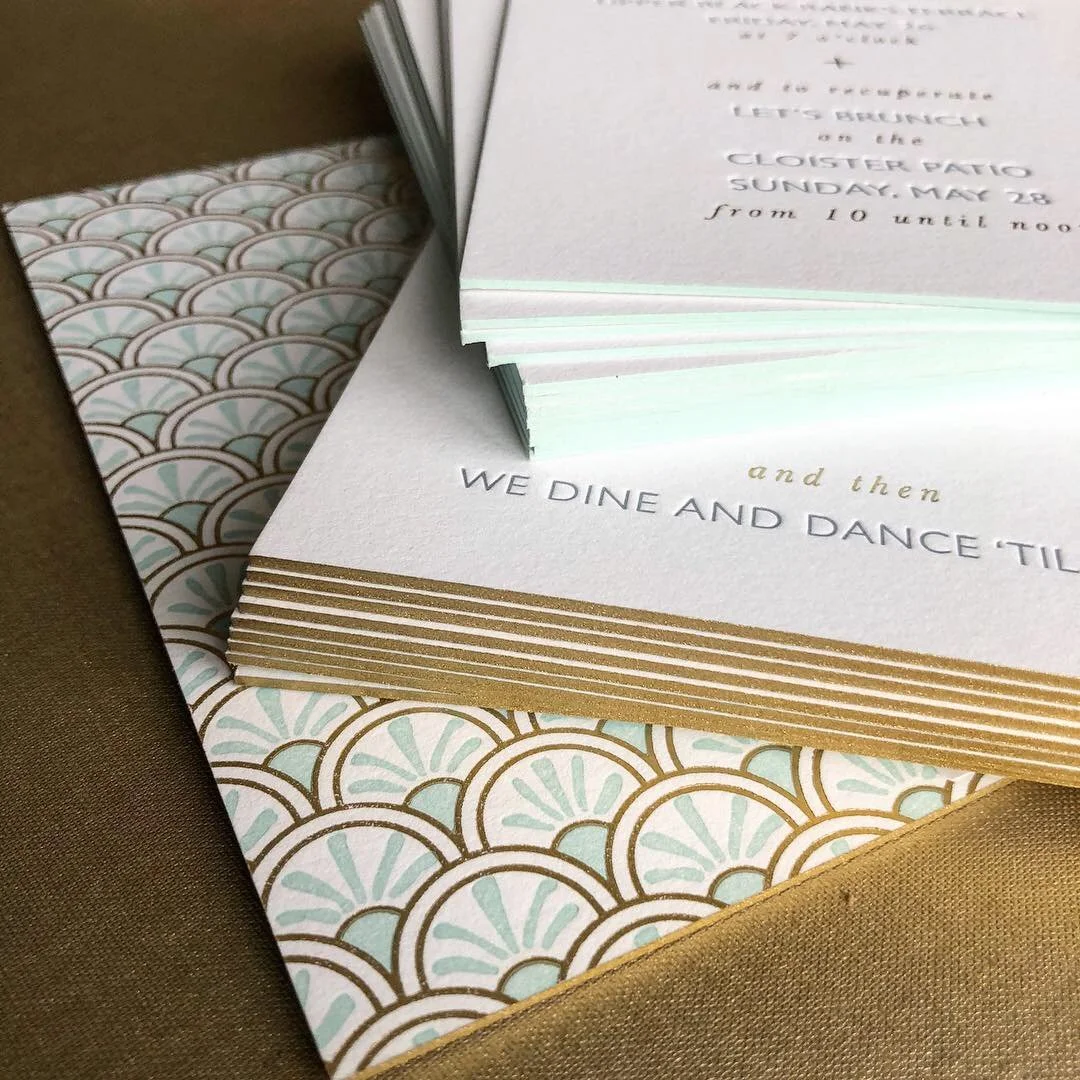
Luxury invitations are more than paper goods — they are a reflection of craftsmanship, etiquette, communication, and personal style. For more than two decades, Bell’INVITO has helped redefine the modern luxury stationery industry through couture-level design, exceptional client experience, and innovative fine printing techniques.
In this educational feature, Bell’INVITO founder Heather Wiese explains the artistry behind luxury invitation printing, including letterpress, foil stamping, engraving, and other artisan techniques that distinguish truly exceptional stationery from mass-produced printing.
Known for combining multiple master print methods under one roof long before it became industry standard, Bell’INVITO continues to raise the bar for luxury invitations, fine stationery, and custom paper goods.
Explore Custom Invitations & Fine Stationery
Bell’INVITO creates luxury wedding invitations, fine stationery, and custom paper goods for clients who value craftsmanship, etiquette, and exceptional design.
Luxury Invitation Printing Techniques
What Makes Luxury Invitations Different?
Luxury invitations are defined not only by design, but by texture, craftsmanship, and the physical experience of the paper itself. Long before digital printing became the norm, fine printing techniques were developed to create dimension, impression, shine, and tactile detail — qualities still associated today with luxury stationery, formal etiquette, and exceptional craftsmanship.
One thing nearly all fine printing methods have in common is the use of an etched plate or die. Whether creating a deep letterpress impression, applying foil with heat and pressure, or producing the raised detail of engraving, these artisan techniques physically interact with the paper to create texture and dimension that cannot be replicated through standard flat printing.
Early in her career, Bell’INVITO founder Heather Wiese learned traditional letterpress printing firsthand, quickly recognizing a gap within the fine printing industry. At the time, most specialty print houses focused on only one or two artisan techniques, with craftsmen and vendors operating separately rather than collaboratively. Heather saw the opportunity to bring multiple master print methods and artisans together under one roof, cross-training techniques and combining processes side-by-side in ways rarely seen within the industry.
That approach helped establish a new standard within modern luxury stationery — blending traditional craftsmanship with innovation, elevated client experience, and couture-level design. Today, many of the layered fine printing combinations now associated with luxury invitations trace back to the culture of experimentation and artisan collaboration Bell’INVITO helped pioneer more than two decades ago.
Below are some of the fine printing techniques most commonly used in luxury invitations and stationery.
Fine Printing Techniques Explained
Letterpress Printing
Deeply pressed impressions created using custom plates and antique presses.
Today, most commonly, resin disposable plates are used for optimal impression.
Inking requires skill and setups are often more costly than foil printing, although the same machine can be used.
Foil Stamping
Metallic or pigmented foil applied with heat and pressure for dimension and brilliance.
Copper plates are used due to the heat requirements.
Setups are less time-consuming, thus less expensive; however, the copper plate can be an expensive component, especially for a low quantity.
Magnesium plates can be used to reduce cost, but this will compromise quality.
Engraving
A heritage printing method known for raised text, precision detail, and timeless elegance.
Highly sought-after print method for elegant invitations, stationery, and important papers.
Requires copper plates and counters for production, which leave the tell-tale “bruise” on the reverse side of the card. A mark of distinction over less expensive print methods.
Apprenticeship-only training and a very low number of worldwide producers have made this method more precious, costly, and time-consuming than other specialty methods.