
2027 Wedding Invitation Trends We're Seeing Right Now
Every wedding season brings a new vocabulary of trends. Some are aesthetic. Others are technological. Most disappear as quickly as they arrive; however, there are a few that seem to be here to stay, at least for a while. What interests us more are the deeper shifts—the changes in behavior, values, and expectations that quietly reshape how sophisticated families entertain and celebrate.
After decades of serving discerning clients across weddings, galas, and private events, we've observed that luxury celebrations rarely move in dramatic swings. They evolve through subtle recalibrations. What affluent hosts choose to emphasize—and what they intentionally leave behind—often reveals more than any color palette or design motif ever will.
As we look toward 2027, several distinct patterns are emerging among planners, venues, designers, and families hosting exceptional celebrations.
These are not trends in the traditional sense. They are signals of where luxury hospitality is heading.
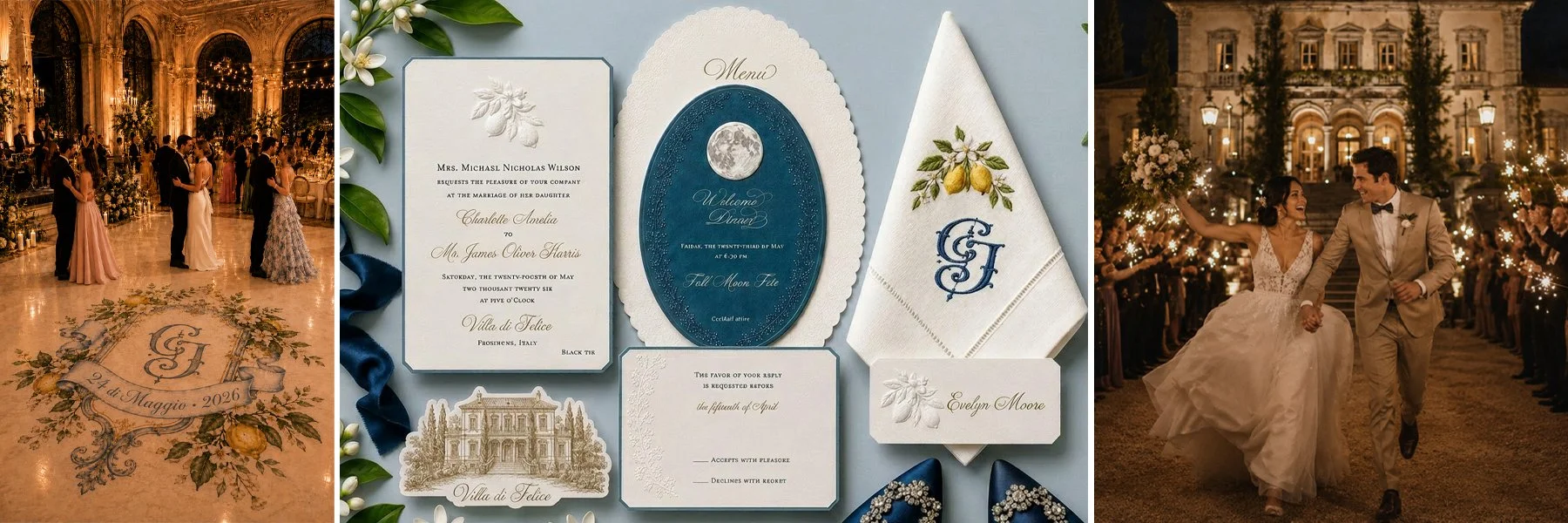
1. Invitations Are Becoming Part of the Experience, Not Merely an Announcement
For years, invitations were viewed primarily as informational tools. Beautiful, certainly, but ultimately functional. Today's luxury clients increasingly view the invitation suite as the opening act of the celebration itself. The most sophisticated hosts understand that anticipation is a form of hospitality. Guests begin forming impressions long before they arrive at a venue or check into a hotel. The invitation establishes tone, expectation, and emotional context.
Rather than simply communicating logistics, invitation suites are being designed to create a sense of participation. This shift mirrors what we see across luxury hospitality more broadly. The guest journey now starts weeks—or even months—before arrival. The invitation—the first communication and first impression— has become the first expression of that journey.
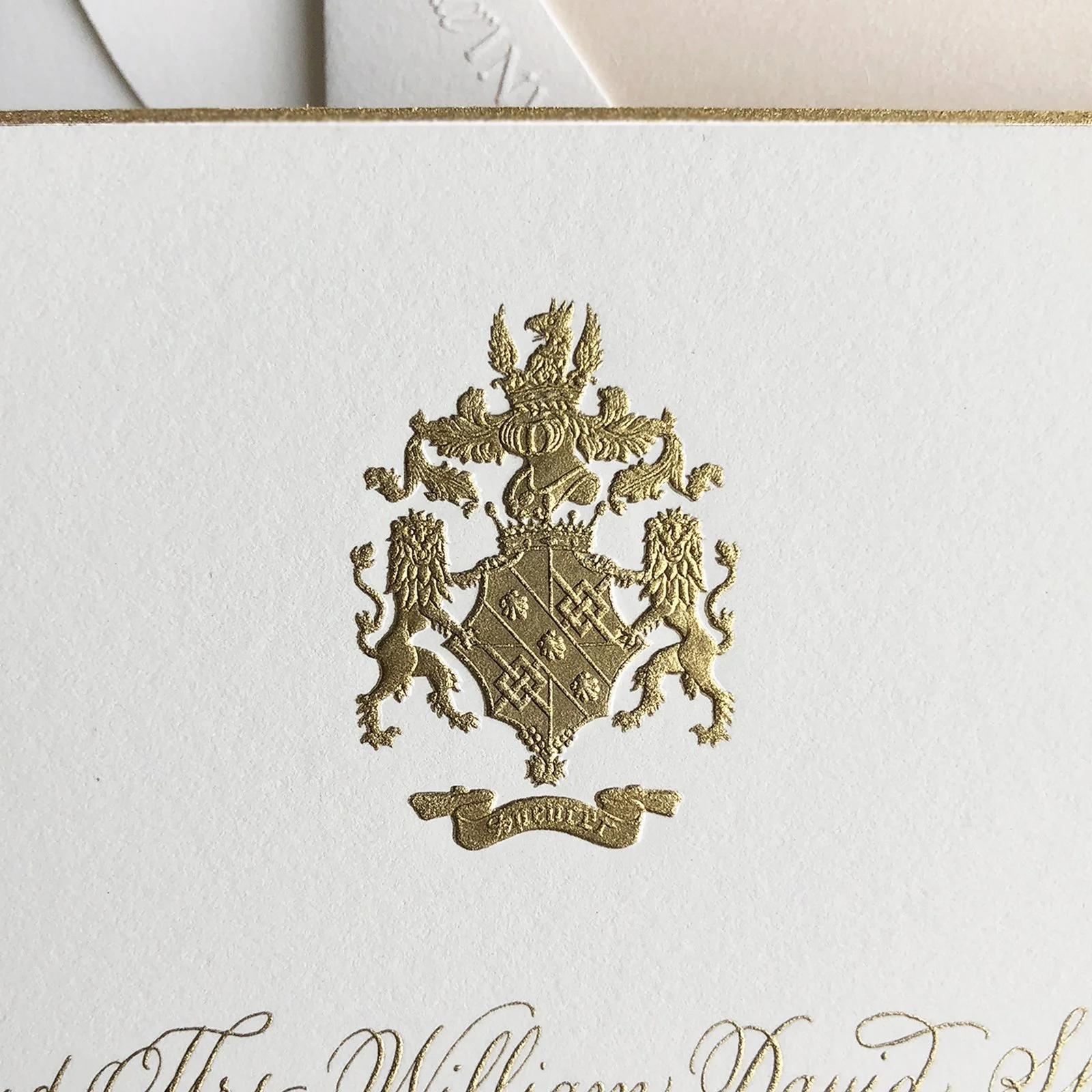
2. Quiet Luxury Has Reached Weddings—But With Greater Nuance
The conversation around quiet luxury has often been oversimplified to “less is more,” but today’s luxury isn’t merely about absence. It is about discernment.
For wedding stationery, this translates into a growing preference for refinement. Families are gravitating toward pieces that reveal their taste and value of craftsmanship, materials, and execution rather than overt embellishment. The result is not necessarily minimalism. Instead, we see clients investing in details that knowledgeable observers recognize immediately: exceptional engraving, custom design, layered printing techniques, hand-finished elements, unusual paper stocks, and bespoke overall production.
The luxury signal has shifted from shiny bells-and-whistles to educated sophistication. Those who know, know.
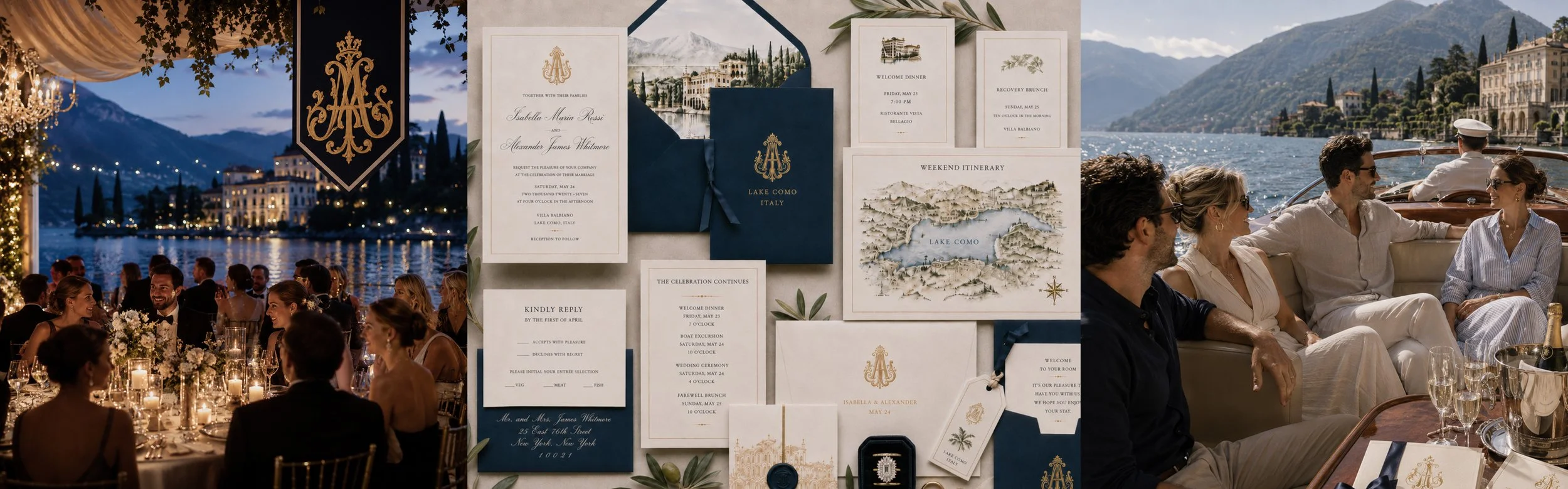
3. Multi-Day Celebrations Are Creating Entire Invitation Ecosystems
The traditional wedding weekend has expanded. Three-day celebrations have become commonplace. Four- and five-day itineraries are increasingly frequent, particularly for destination events and international guest lists that are more intimate. As celebrations become more layered, invitation programs are evolving accordingly. The traditional one-host-per-event is less common, although not altogether diminished.
Rather than a single invitation accompanied by supporting cards, many events now require a complete communications ecosystem. Welcome gatherings, excursions, sporting activities, private dinners, recovery brunches, transportation details, and post-wedding events—and all their attire suggestions, all require thoughtful coordination.
This complexity is changing the role of stationery. The invitation suite is becoming an architectural framework that helps guests navigate an increasingly sophisticated experience. And while information is needed, overdoing it is still seen as gauche. Where to say what has become the signature of elegance.
The elite place importance on striking a balance between information with elegance, ensuring guests feel informed without feeling managed.
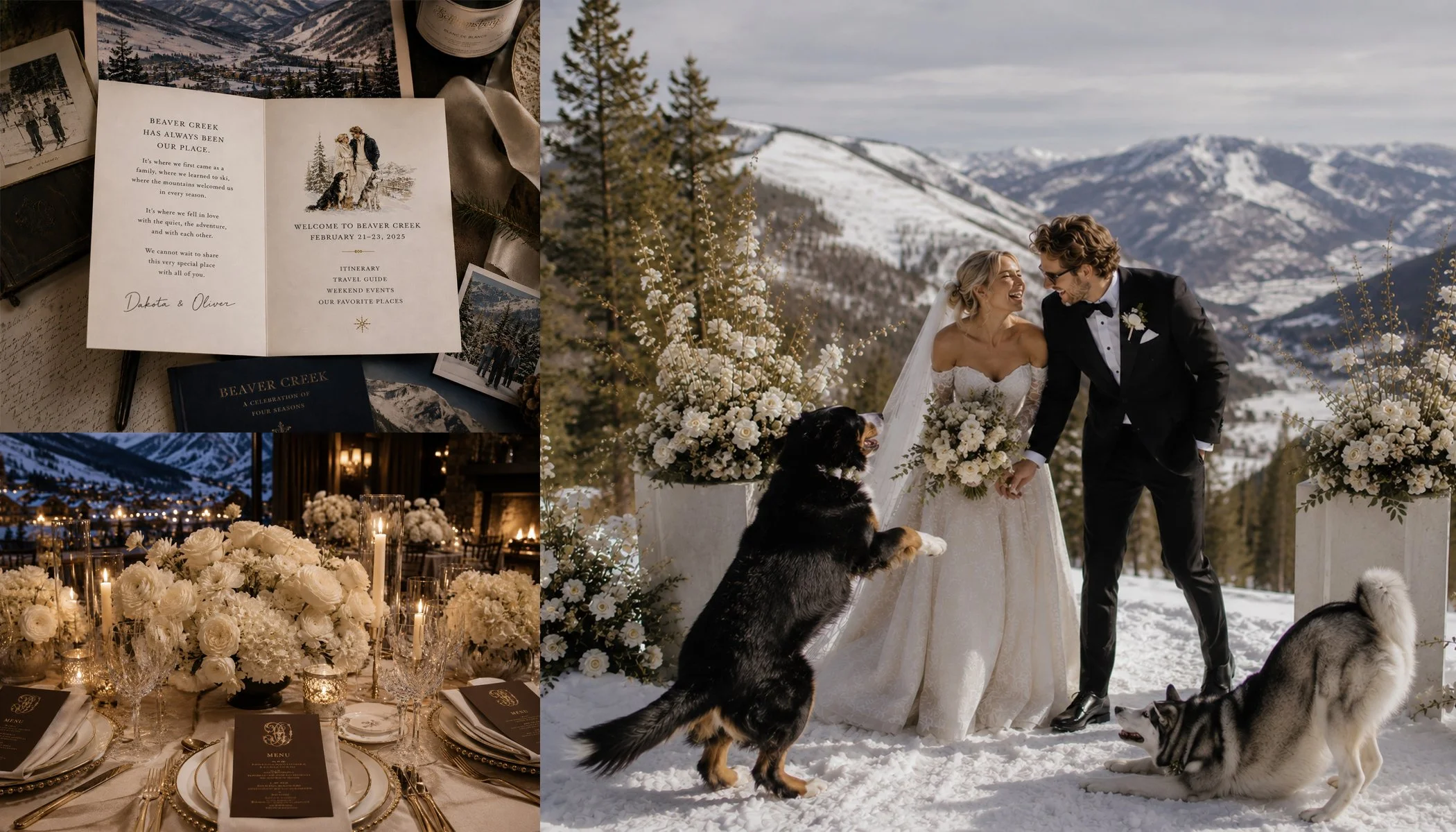
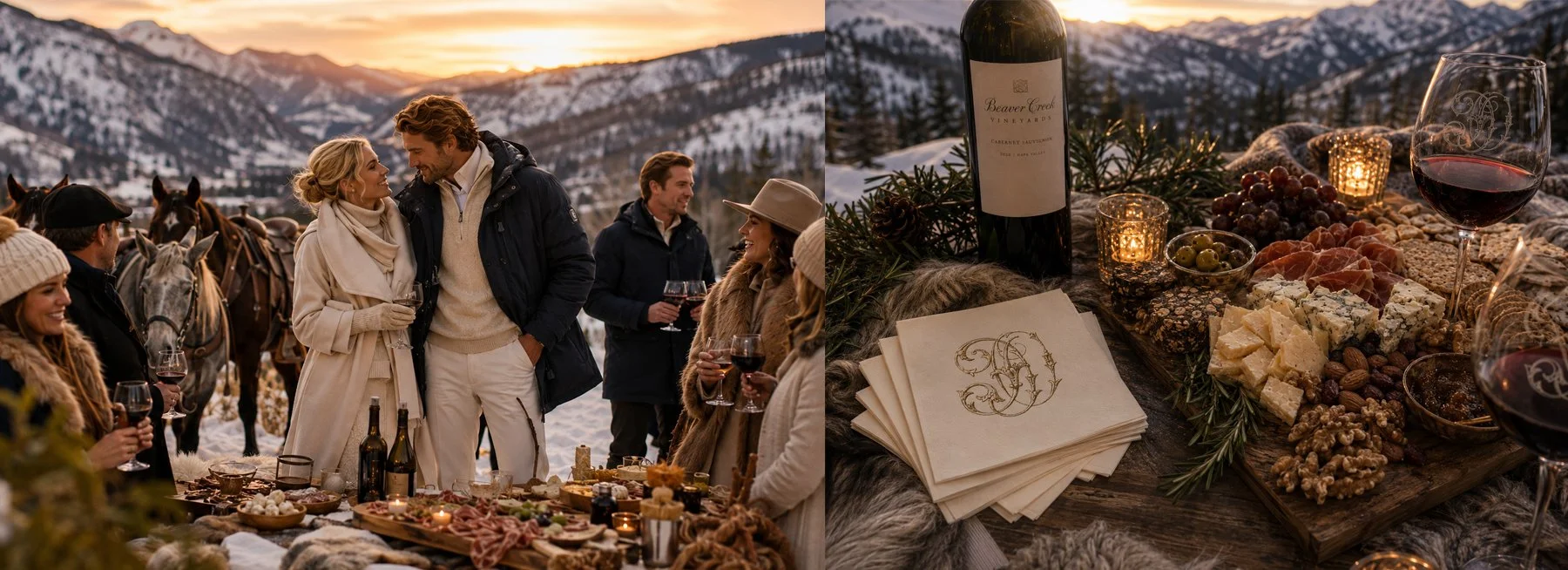
4. Personalization Is Moving From Monograms Toward Narrative
Luxury clients have always valued personalization. What is changing is how they define it. That’s not to say monograms are passé. They have their place for many things in the house. Increasingly, the old traditions are resurfacing, with monograms used both for the couple and for each person independently.
While that element remains relevant, today's affluent couples are increasingly interested in narrative personalization when it comes to milestone events.
Guests want to understand the story behind the event. Why this destination? Why this venue? Why these traditions? Why this sequence of experiences?
The strongest invitation suites now reveal something meaningful about the hosts and couples themselves. They communicate personality rather than merely identity. This shift reflects a broader cultural movement among affluent consumers. Exclusivity alone is no longer sufficient. Meaning matters. The most memorable luxury experiences feel deeply personal rather than merely expensive.
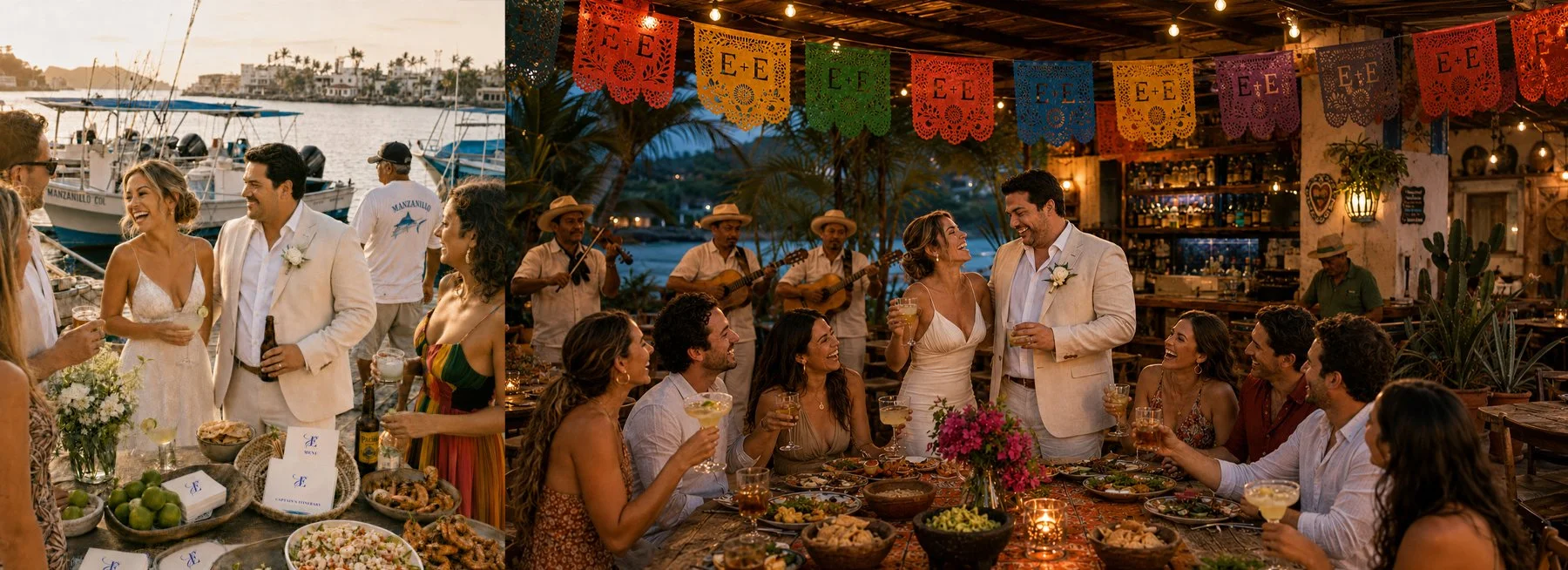
5. Destination Weddings Are Becoming More Immersive and More Local
Destination weddings continue to thrive, but their character is evolving. Earlier generations of destination celebrations often treated the location as a backdrop. Today's hosts increasingly treat it as a collaborator.
Rather than importing an event concept into a location, couples are seeking ways to immerse guests in the culture, craftsmanship, cuisine, and traditions of the destination itself. This influences everything from event design to guest communications and itinerary. Invitation suites increasingly incorporate local references, regional artistry, destination-specific materials, and storytelling elements that create a stronger connection between guests and place.
The emphasis has shifted from travel to immersion. Guests are no longer attending an event in a destination. They are being invited into a destination to bond and create memories there with the hosts.
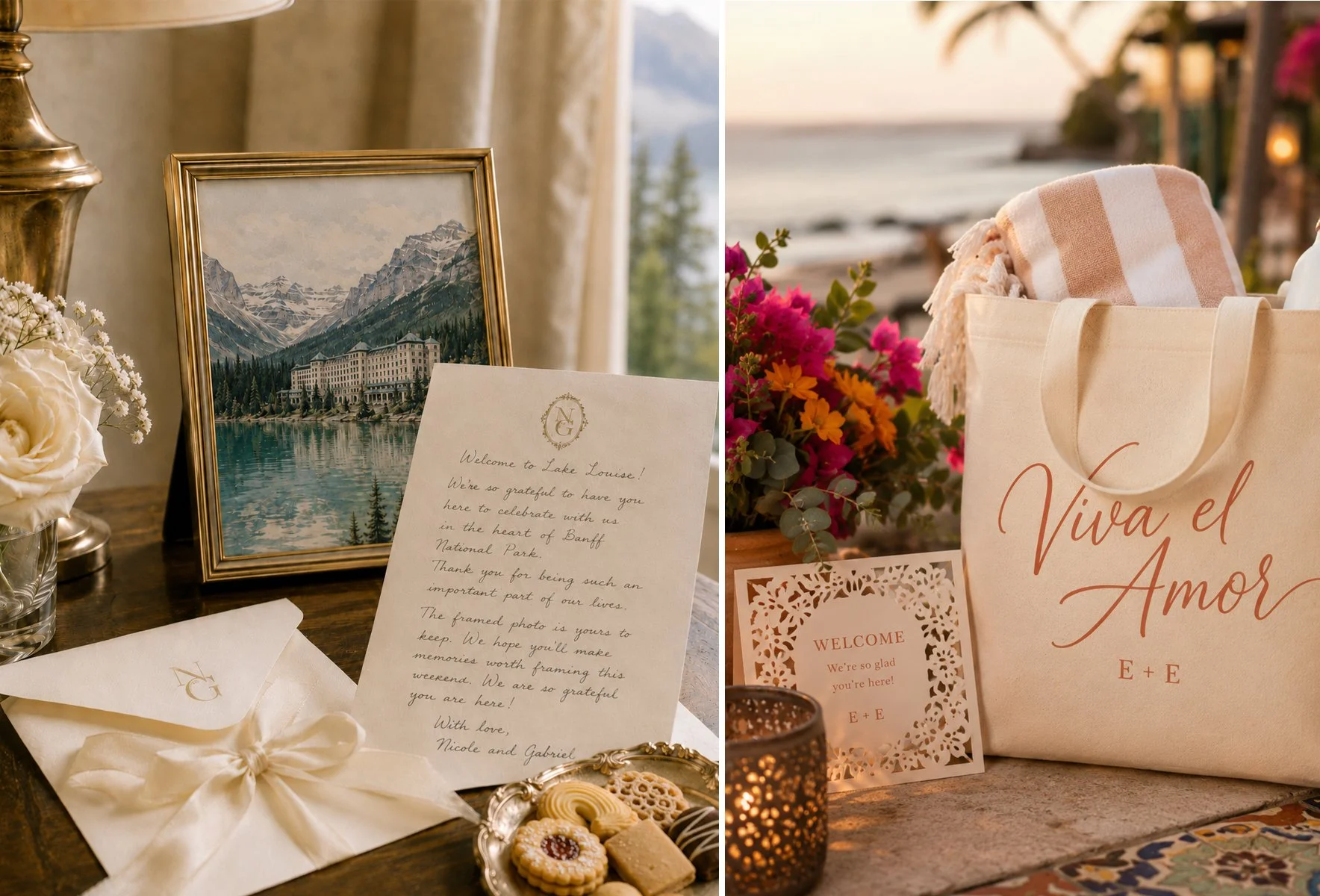
6. Heirloom Thinking Is Returning
One of the most significant shifts we are observing is the renewed importance of permanence. For much of the past decade, convenience dominated decision-making across nearly every category.
Today, affluent clients increasingly seek objects worth keeping. Wedding invitations are benefiting from this change. Families are asking different questions than they did five years ago. Wil this be framed? Will our children someday see this? Will guests keep it? Will it feel meaningful ten years from now? These are not practical considerations. They are emotional ones.
In many ways, luxury has become a reaction against disposability and waste.
The invitation is once again being viewed as a future artifact rather than a temporary communication. That perspective changes everything.
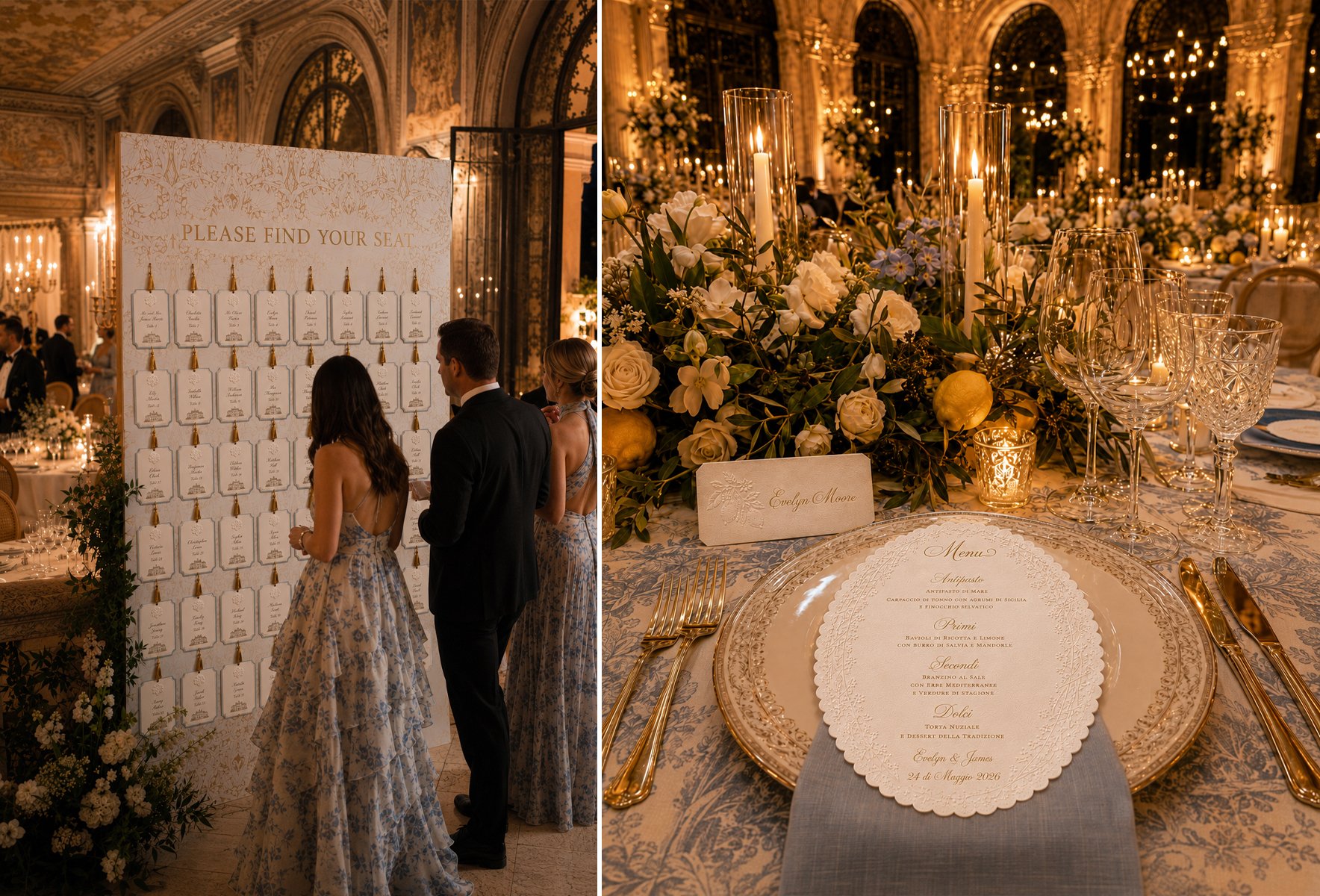
7. Hospitality Is Becoming the Ultimate Luxury Signal
Perhaps the most important shift of all has little to do with aesthetics. The highest form of luxury in 2027 is hospitality. Affluent hosts are increasingly focused on how guests feel rather than what guests are told.
This is a subtle but significant distinction. The most admired celebrations are not necessarily the largest, the most photographed, or the most extravagant. They are the ones that make every guest feel considered.
Invitation programs, menus, and seating cards play a critical role in this experience. Clear communication, thoughtful guidance, intuitive organization, personalized touches, and attention to guest comfort all begin long before the event itself. In many cases, exceptional hospitality is invisible. Guests simply feel at ease and considered special. The invitation is often where that feeling begins. The arrival and reception are where it’s punctuated and felt deeply.
8. The Return of Human Craftsmanship
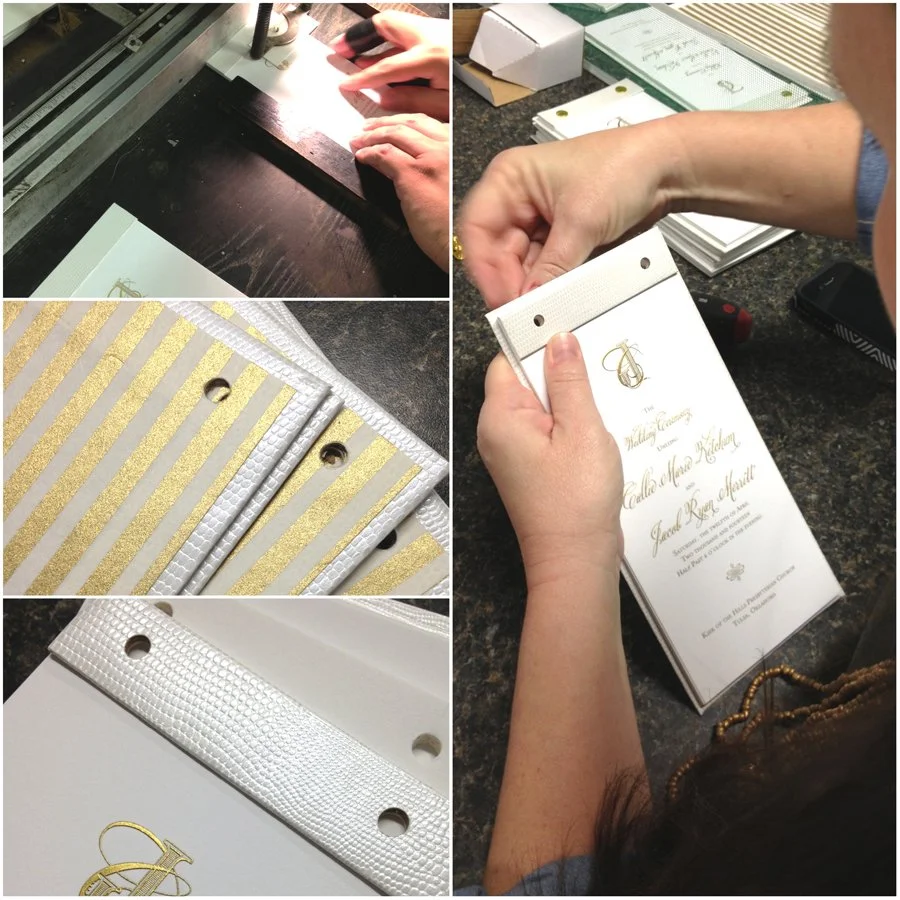
In an era increasingly shaped by automation, human craftsmanship has become more valuable—not less. Across luxury sectors, clients are showing renewed appreciation for evidence of the maker's hand. They want to know who created something, how it was produced, and why certain methods were chosen.
The important milestone documentation of wedding stationery is no exception. Processes once considered traditional are being re-evaluated as extraordinary. Hand engraving. Fine letterpress. Calligraphy. Custom finishing techniques. Artisan production methods. These are no longer viewed as nostalgic luxuries. They are increasingly viewed as markers of authenticity.
As technology continues to accelerate, craftsmanship provides something technology cannot replicate: human presence. That distinction carries tremendous value.
Looking Ahead
The luxury weddings of 2027 are becoming more intentional. Affluent clients are moving away from fast fashion paper equivalents and toward experiences that feel personal, thoughtful, and enduring. They are investing in hospitality over spectacle, craftsmanship over convenience, and meaning over novelty.
The wedding stationery package remains uniquely positioned at the center of these shifts. Long before guests arrive, it communicates the values of the hosts, the quality of the experience, and the care that has gone into every detail.
For planners, venues, designers, and families alike, understanding these changes is about more than stationery. It is about understanding where luxury itself is heading.
Begin a Conversation
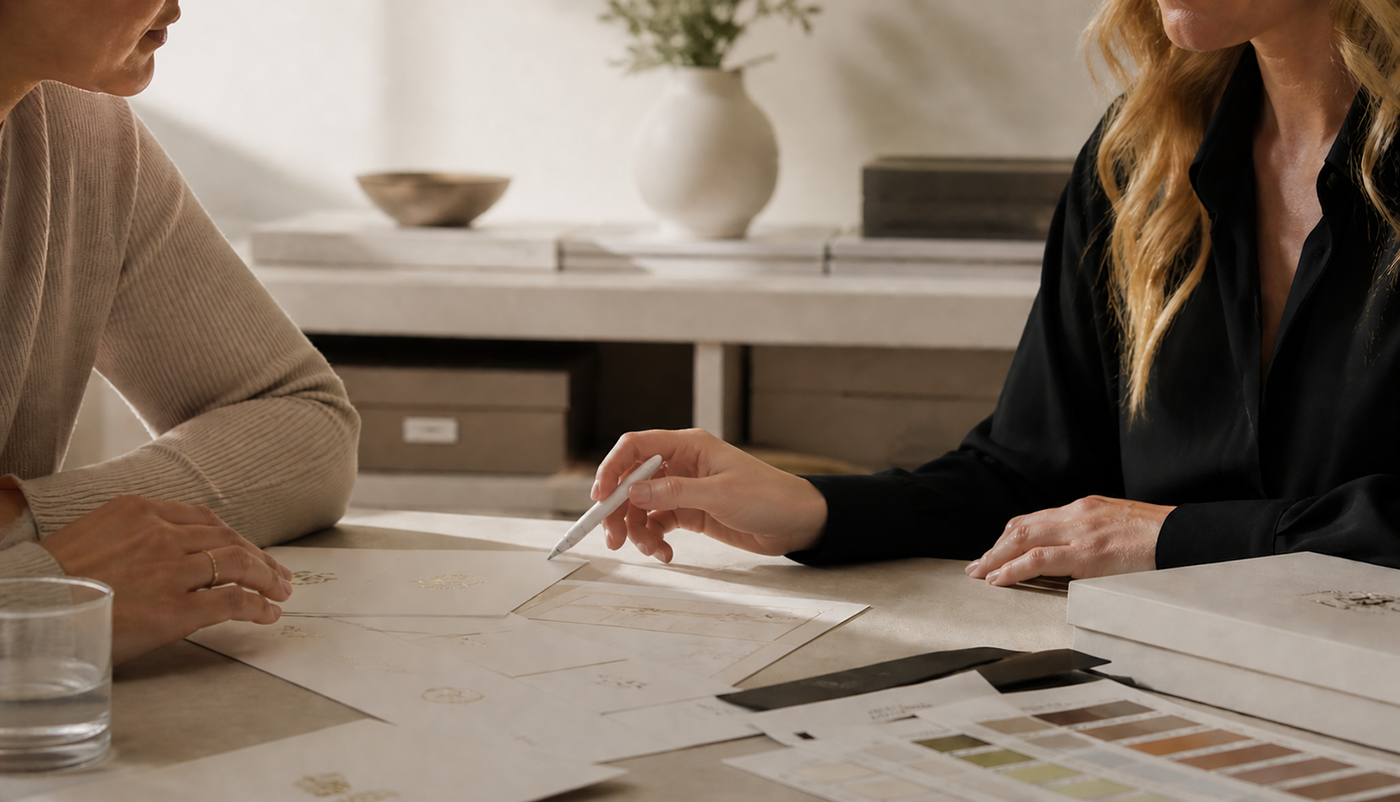
For weddings, galas, and private events requiring custom stationery, our studio works closely with families, planners, venues, and event designers to create pieces that feel considered from the first impression to the final farewell. We highly recommend booking a complimentary Zoom call before an in-person meeting. Before you do any of that—we are happy to learn more about you and reach out to coordinate.
Please share a few details below, and a member of our team will be in touch.