
Engraved vs. Letterpress Wedding Invitations: What Every Couple Should Know Before They Order
Most couples choose wedding invitations by looking at the design first: the typography, the color, the monogram, the envelope liner. But in luxury stationery, the printing method matters just as much—arguably more than—the artwork.
Engraving and letterpress are two of the most recognized and respected printing methods for wedding invitations. Both are tactile. Both require skilled craftsmanship. Both signal quality before a guest reads a single word. The difference starts with the impression.
Engraved wedding invitations have raised ink. Letterpress wedding invitations have a pressed-in impression. Engraving lifts the ink above the surface of the paper by way of extreme pressure and a custom-etched metal plate, traditionally copper. Letterpress presses the design into soft cotton paper, creating a recessed, dimensional effect. Alter the plate substrate, the paper type, the ink consistency, or the craftsman’s equipment and skill, and you’re pulling levers. An experienced production crew must know how to balance these offsets. The first thing to know about specialty printing methods is that creativity can be breathtakingly beautiful—or an experiment gone horribly wrong. Always partner with experienced professionals who can balance and set expectations properly. Creativity often means longer lead times for labor, more waste, and, in some cases, lower-quality outcomes if the design doesn’t accommodate the requested specifications.
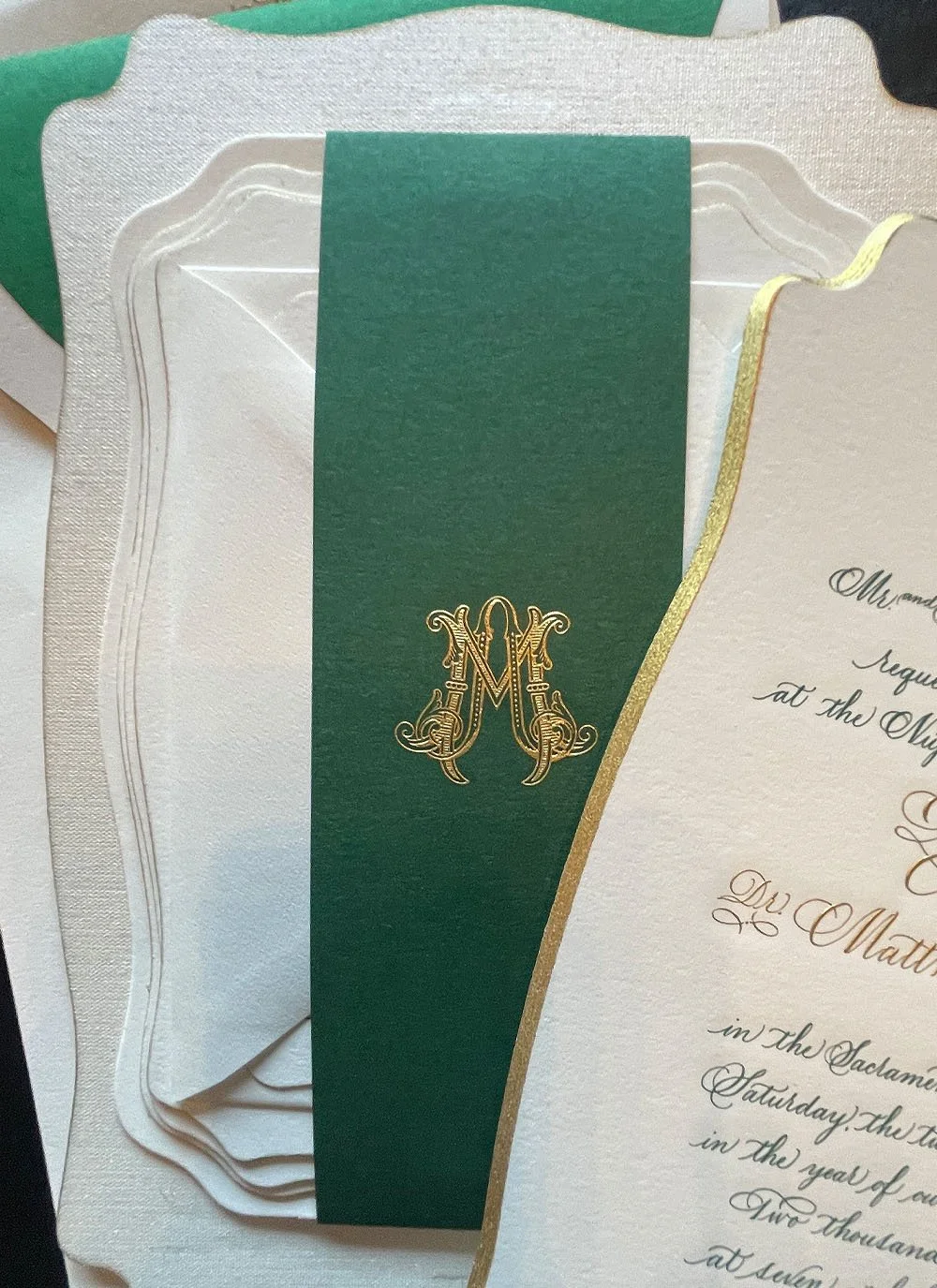
Engraved Wedding Invitation in Forest Green and Gold Inks.
Design by Bell’INVITO. Bell’INVITO Ribbon Backer (TM) featured with engraved monogram. Calligraphy by Jan Pruitt etched into copper plates and engraved in 2 colors on the invitation and additional pieces.
Once you’ve chosen your experts, there’s something to understand about the perceived formality of each method. Raised ink, also known as engraved plates or die-stamped printing, is seen as the most formal. Engraved dies will hold more fine detail and have been used for decades longer, establishing a look and feel of unmistakable quality that royalty and elites have become accustomed to presenting to guests.
Letterpress, as we know it in luxury stationery today, gained momentum in the early 1990s when artisans altered vintage proofing presses, previously used to print block type for newspapers and other publications, to impress raised dies rather than “kiss” the paper as they were originally designed to do. This requires a skilled craftsman to ink and maintain proper coverage throughout a run.
Both require etched plates. Engraved printing requires two, while letterpress requires one. Both require fine papers for their tell-tale imprints. Both leave unmistakable texture and richness on each card—one raised, one depressed.
That distinction may sound small, but it changes everything: the formality, the feeling in the hand, the way light catches the paper, and the message your invitation sends about the celebration to come.
The Case for Engraving
Choose engraving if your wedding is formal, black-tie, traditional, held in a historic venue, or designed around classic etiquette.
Engraving says: formal, polished, precise, heirloom.
The Case for Letterpress
Choose letterpress if your wedding is refined but more textural, modern, garden-inspired, estate-based, destination-focused, or centered on handmade detail.
Letterpress says: tactile, crafted, dimensional, quietly luxurious.
Designer’s Note
After more than twenty years designing custom invitations, I’ve learned that most guests won’t know whether an invitation is engraved or letterpress. They will, however, know exactly how it made them feel.
The paper weight, the impression, the raised ink, the way the invitation emerges from the envelope — all of it quietly tells guests what kind of event they are being invited to attend.

Mix of engraved and letterpress printed wedding invitations.
The Final Decision
Both engraving and letterpress represent extraordinary craftsmanship. Neither is inherently better, more beautiful, or more luxurious than the other. The right choice depends on the atmosphere you want to create, the impression you want to leave, and the experience you want your guests to have from the moment they open the envelope.
Engraving communicates formality, precision, and tradition. Letterpress communicates texture, craftsmanship, and understated luxury. Both have earned their place among the finest printing methods in wedding stationery because both transform paper into something memorable.
The best invitations are not simply well-designed. They are thoughtfully produced in harmony with their designer and production expert in sync. When the printing method, paper, typography, and finishing details work together, the invitation becomes more than an announcement—it becomes the first chapter of the celebration itself.
For couples considering custom wedding invitations, the most valuable step is often seeing and feeling the options in person. Understanding the difference between engraving and letterpress is one thing. Experiencing it is another entirely.
Experience the Difference in Person
Understanding the difference between engraving and letterpress is one thing. Holding the paper, feeling the impression, and seeing the craftsmanship firsthand is another entirely. Schedule a consultation to review printing methods, paper options, finishing details, and the invitation styles best suited to your celebration.