
The Bell’INVITO Library | Wedding Invitations
How Much Do Custom Wedding Invitations Cost?
A clear guide to what you are paying for, where the investment changes, and how to spend thoughtfully.
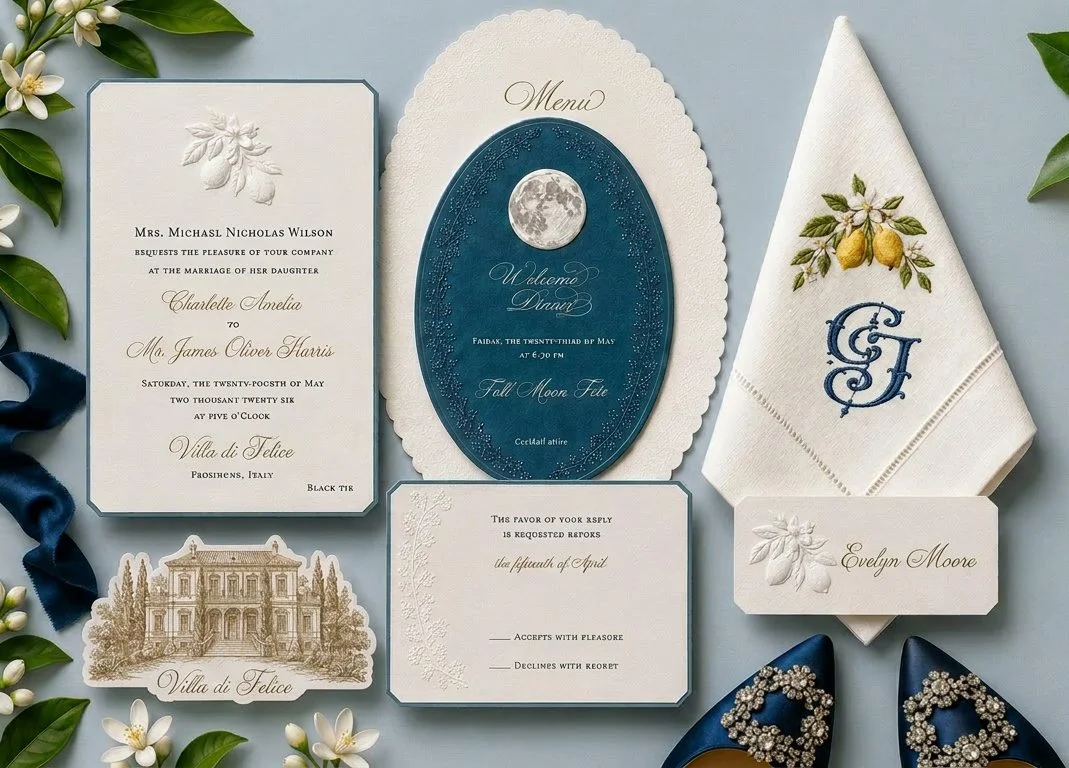
Every decision communicates something. The way we greet someone. The words we choose. Our posture, our tone, the shoes we selected that morning—even the way we style our hair. Long before we explain ourselves, we have already begun communicating.
A wedding invitation works in exactly the same way.
Before your guests see the flowers, hear the music or enter the venue, the invitation introduces your celebration. It communicates formality, personality, care and the degree to which the experience has been considered.
That is why wedding invitations are better understood not simply as an expense, but as an investment in communication. This does not mean spending beyond what is comfortable. It means investing time and money with intention, in the same way you would approach any other meaningful form of communication.
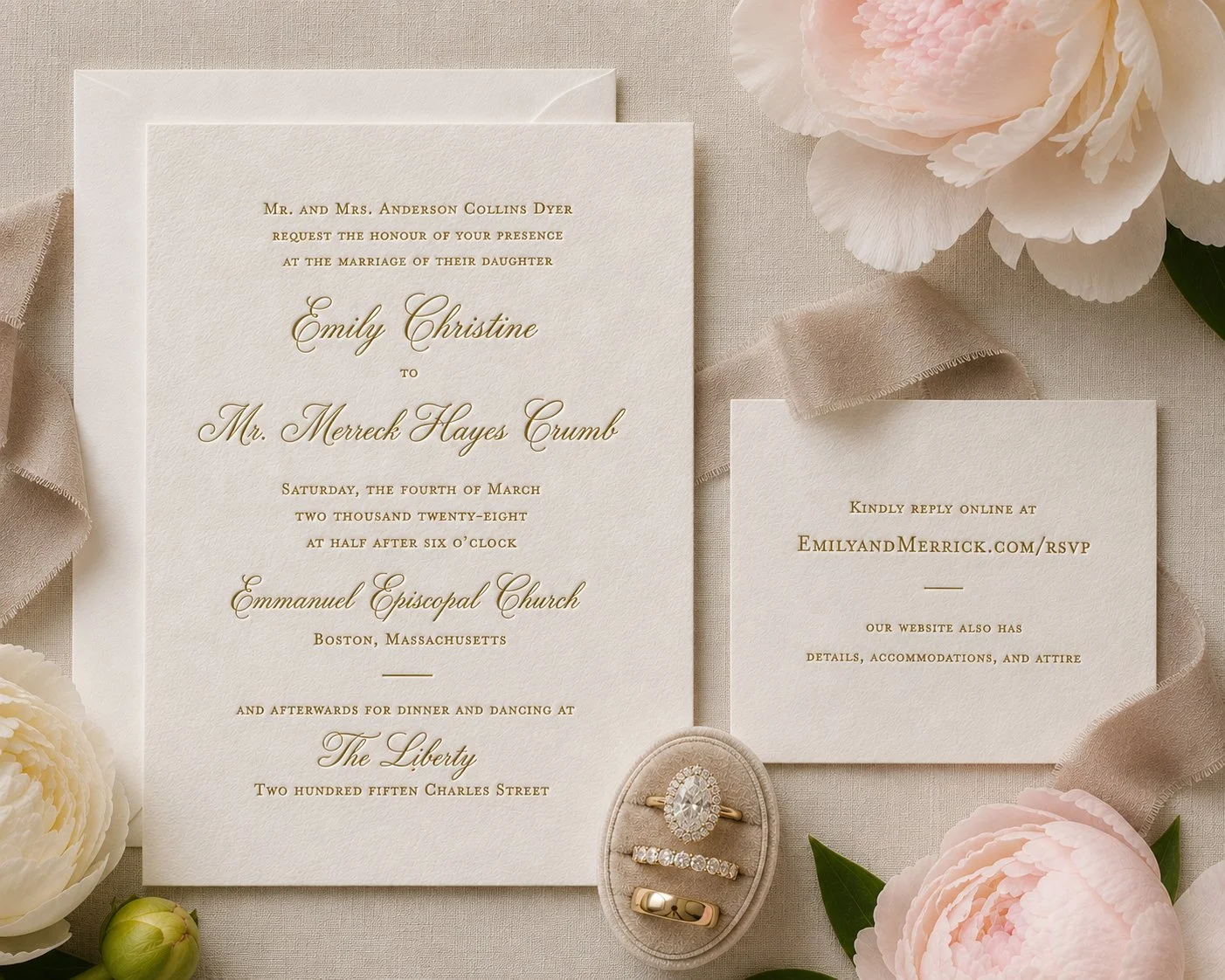
Approximately 100 pre-designed letterpress invitation sets, including a matching letterpress reply card and guest addressing on the mailing envelopes.
Important: This is a planning example, not a universal quote. Wording length, paper availability, envelope choice, postage, timing and production requirements may affect final pricing.
Why One Invitation Can Cost Thousands More Than Another
Two invitations may look similarly restrained in a photograph and require entirely different levels of production. The difference is rarely the amount of paper alone. It is the number of skilled processes required to transform that paper.
Fine printing is physical. A press must be prepared. Ink must be mixed. Pressure must be adjusted. A plate or die must be made from the approved artwork. Registration must be tested so each impression lands precisely where it belongs. Every additional color, texture, cut or construction can introduce another setup.
A plate or die is the custom piece created from the artwork and used to press ink, foil or texture into the paper. Some processes create a lowered impression. Others create raised ink or raised paper. Either way, the design must first become a physical production tool.
A common misconception is that the cost of custom wedding invitations is determined primarily by quantity. In reality, quantity is often one of the smaller variables. The investment is determined by the craftsmanship, materials, production methods, and expertise required to transform paper into a memorable first impression.Bell’INVITO
What You Really Need to Know
Nearly every factor that determines the cost of a custom invitation begins with something called a setup. A setup is the preparation required before a single sheet of paper can be printed, pressed, embossed, foil stamped, die cut, edge colored, mounted or otherwise transformed.
Each setup requires skilled labor, specialized equipment and dedicated production time. Every setup must also be completed in a precise sequence because one process often depends on another being finished first. This is why fine printing takes weeks longer than fast printing.
Every printing color requires its own setup. Every printing process requires its own setup. Every individual piece within the suite—the invitation, reply card, enclosure cards, mailing envelope and every additional component—requires its own setup as well. As layers of craftsmanship are added, the number of setups increases, which is one of the primary reasons the investment varies from one invitation suite to another.
What Each Fine-Printing Setup Requires
Artwork Preparation
The approved design must be separated by color and process so the correct production tools can be created.
Plate or Die
A custom plate or die is etched or formed from the artwork for letterpress, foil, engraving, embossing or cutting.
Press Preparation
The machine is prepared for the specific paper, ink, pressure, temperature and production method.
Registration
Every pass must align precisely with the other printed, embossed, foiled or cut elements.
Testing
Ink, impression, pressure and position are tested and refined before the full run begins.
Finishing
Trimming, edge color, mounting, folding, lining, assembly and inspection happen after printing.
| Feature | What must be set up or made | Why it changes the investment |
|---|---|---|
| Letterpress | A custom printing plate, hand-mixed ink and press setup for each color | Each ink color requires its own plate, ink mix, press setup, registration and press pass. |
| Engraving | An engraved metal die, counter and engraving press setup for each color | The die and counter create crisp, raised ink on the front and the coveted telltale impression—often called the “bruise”—on the reverse of the paper. |
| Foil Stamping | A custom metal die, foil and heated press setup for each foil color | Heat, pressure, foil type and registration are calibrated separately for every foil color and press pass. |
| Embossing | Matched front and back dies | The matched dies sculpt the paper without ink. Their cost and creation time vary greatly according to the depth, size and intricacy of the design. |
| Die Cutting | A custom cutting die or programmed specialty cut | Custom shapes require dedicated tooling, registration, setup and finishing before the piece is ready for production. |
| Thicker Paper | Fine base papers mounted into two, three, four or more layers using specialized adhesives | Quality papers begin with fine base materials. Thickening requires a specialized gluing process, curing, finishing and additional waste depending on the fine-printing techniques that follow. |
| Edge Color | Hand-mixed color for consistency, plus a dedicated station setup and disassembly for each color | Edge colors are applied by hand in small batches. Each setup is customized to the paper, print methods and other specifications that make up the order. |
| Assembly & Handwork | Hand inspection, counting, stuffing, sealing, packing and protective packaging | Every fine-printing order is checked by human eyes and hands. Fast printing relies more heavily on weight, mechanized counters and automated fulfillment; fine printing protects weeks of hard-to-replace craftsmanship before it reaches the client. |
The Collection and The Commission
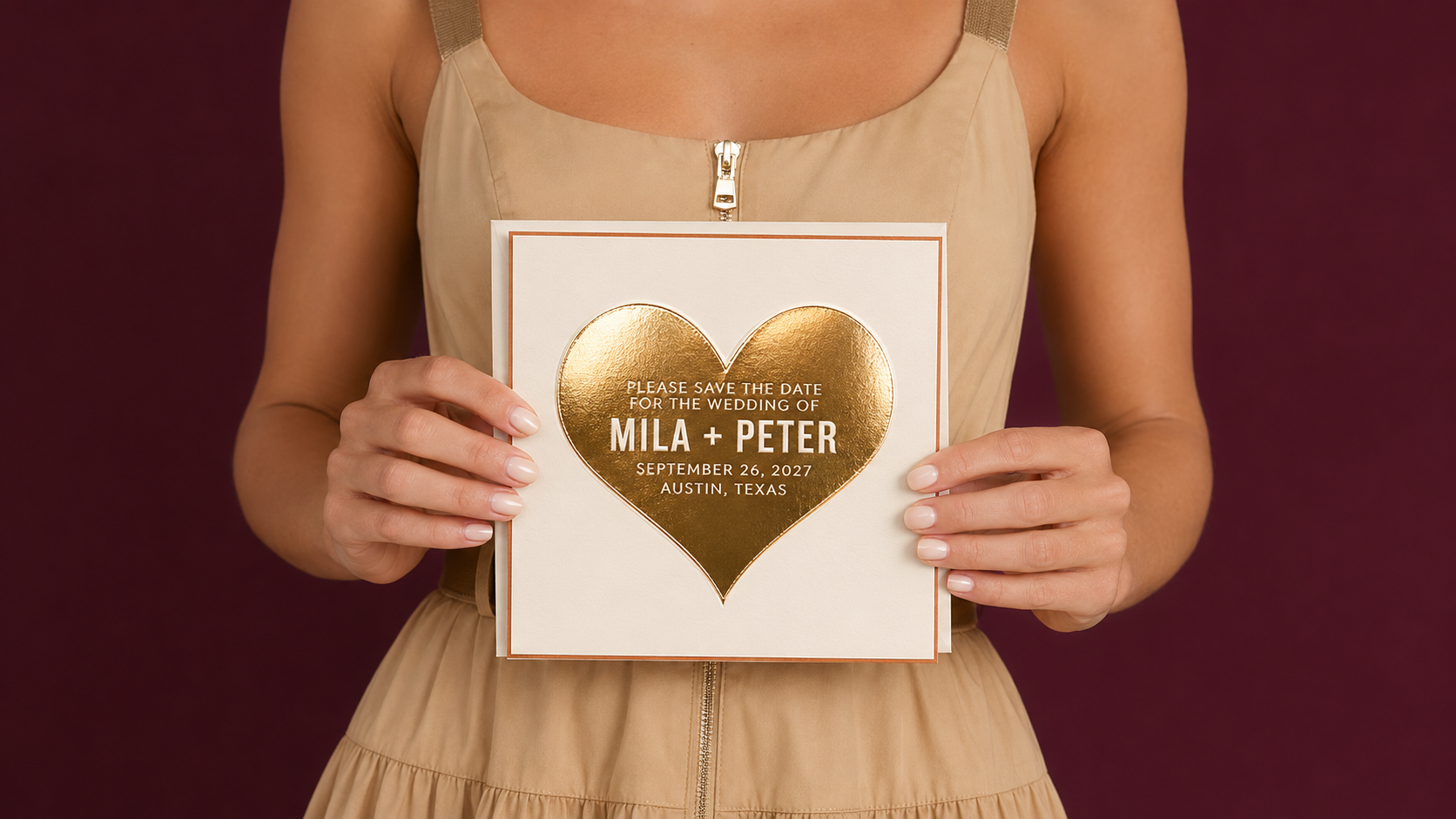
Bell’INVITO offers two distinct ways to begin: a curated, pre-designed Collection that is personalized online, and an original Commission developed through consultation.
The Collection
Online · Bespoke Pre-Designed
Signature Letterpress Suite
- Approximately 100 invitation sets
- A pre-designed Bell’INVITO invitation
- One letterpress ink color
- Matching letterpress reply card
- Mailing envelopes
- Guest addressing on the envelopes
- Thoughtful personalization by Heather Wiese of your wording, etiquette, level of formality and communication style—tailored to your preferences and celebration
 The Commission
Consultation-Based · Bespoke Original Design
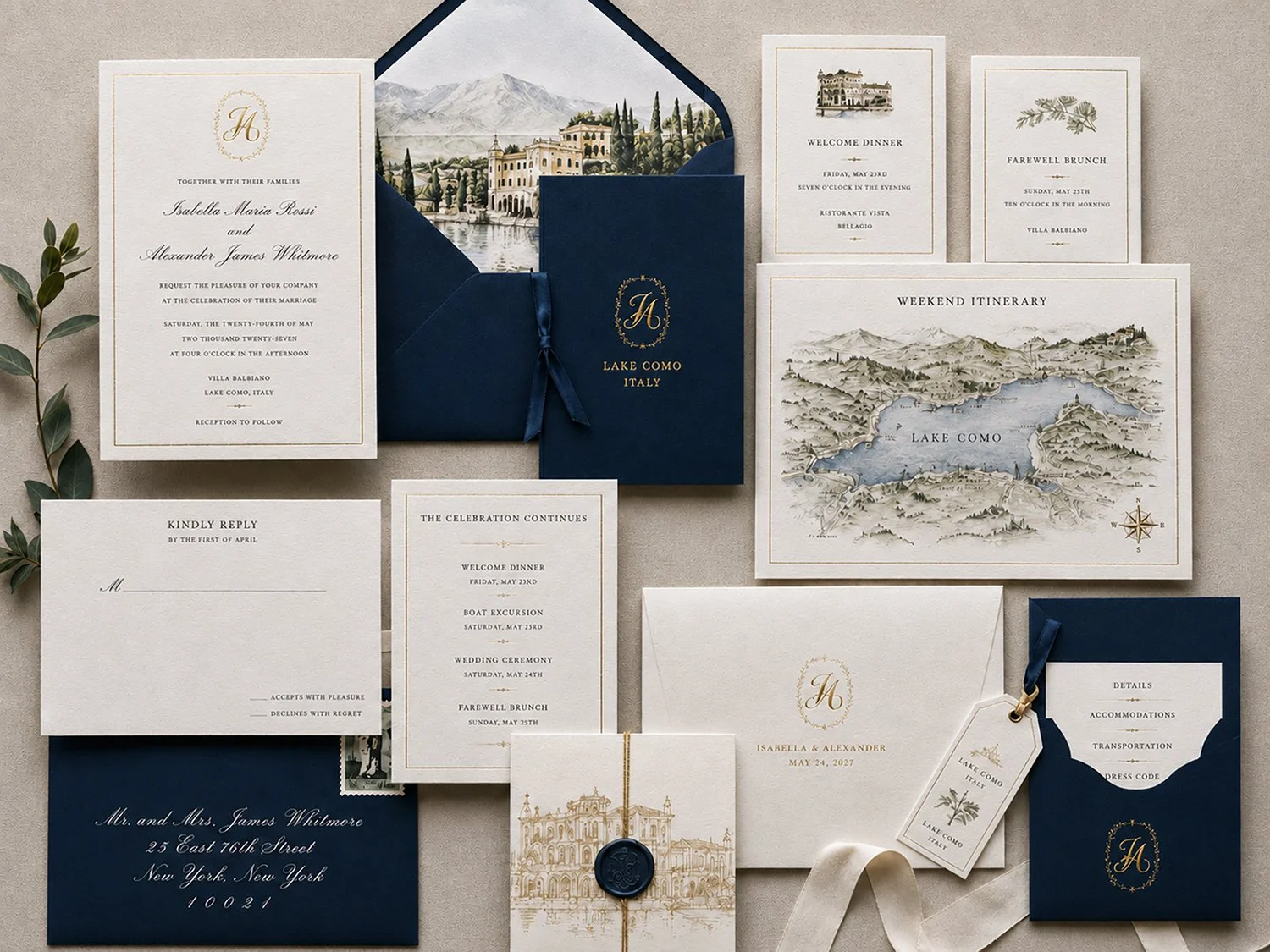
Bespoke Multi-Process Suite
Most commissions begin around $5,000.
- Original Bell’INVITO artwork, crest, monogram or custom illustration
- Original consultation-led design process with Heather Wiese
- Multiple events and enclosure pieces
- Two or more fine-printing processes
- Double-, triple- or quadruple-thick mounted papers
- Hand embossing, foil, edge color, specialty die cuts and custom finishing
- Custom envelope construction and handcrafted liners
- Full guest addressing, assembly, finishing and mailing management
Unlike a Collection suite, every Bell’INVITO Commission is quoted according to its unique combination of artwork, fine-printing processes, materials, finishing techniques and craftsmanship.
Most custom quotations can be prepared immediately by Bell’INVITO and our network of Licensed Bell’INVITO Dealers using our proprietary pricing system. Highly specialized commissions involving unusual materials or artisan techniques may occasionally require additional time while specialty partners provide custom estimates.
Whether you are beginning with a simple idea or a fully developed vision, we will help you determine the printing methods, craftsmanship and investment that best fit your celebration.
Meet Personally with Heather Wiese
Discuss your event, explore possibilities, receive etiquette and wording guidance, and review the craftsmanship, production methods and investment for your custom project.
What Determines the Final Cost?
Design
Personalizing an existing design requires a different scope from creating an original identity, illustration, monogram or crest.
Quantity
Invitation quantities are based on households, not total guests. Setup costs remain even when the quantity is small.
Printing
Digital, letterpress, foil, engraving and embossing require different equipment, tooling and skill.
Paper
Composition, thickness, color, mounting, handmade qualities and special shapes all affect production.
Components
Each reply card, details card, weekend itinerary and additional-event insert adds design and production.
Service
Etiquette guidance, proofing, addressing, assembly, postage review and mailing management protect time and reduce errors.
How Printing Methods Compare
| Method | Visual and tactile result | Best suited to | Relative investment |
|---|---|---|---|
| Digital Printing | Smooth, crisp and versatile; reproduces full color, watercolor, photographs and tonal artwork. | Complex color, illustration, tighter timelines and edited suites. | $ |
| Letterpress | Ink is pressed into the paper, creating a tactile lowered impression. | Typography, monograms, restrained palettes and cotton paper. | $$ |
| Foil Stamping | Metallic or pigmented foil creates reflectivity and dimension. | Metallic accents, borders, crests and formal details. | $$–$$$ |
| Engraving | Exceptionally sharp ink is raised above the paper, with a visible impression on the reverse. | Formal social stationery, fine lines and delicate calligraphy. | $$$ |
| Combined Processes | Contrasting effects—such as raised ink with blind embossing or letterpress with foil. | Designs in which the making is part of the story. | $$$+ |
What Does “Price Per Invitation” Actually Include?
“Price per invitation” can be misleading because different proposals may be describing entirely different scopes. One quote may include only the invitation card. Another may include the complete design and production of the suite.
- Design development or personalization
- Invitation and all enclosure cards
- Mailing, inner and reply envelopes
- Printing plates, dies and press setup
- Proof rounds and etiquette review
- Envelope liners and return addressing
- Guest addressing or calligraphy
- Assembly materials and labor
- Postage review and mailing coordination
- Shipping, delivery or rush production
The useful comparison is not card against card. It is complete scope against complete scope.
Where Quality Has the Greatest Effect
Invest Here First
- Clear, thoughtful design
- Excellent typography
- Correct and appropriate wording
- Paper suited to the printing process
- Professional printing and production
- Accurate guest addressing
- Careful assembly and postage review
Where Thoughtful Editing Helps
- Enclosures repeating information online
- Several decorative processes competing at once
- Packaging that adds bulk but little meaning
- Trendy details unrelated to the celebration
- Complicated folds and constructions
- Pieces included only because they are expected
- Embellishments that do not strengthen the design
Some of the most memorable invitations are intentionally restrained. Their effect comes from proportion, paper, typography, language and execution—not from the number of embellishments.
Editing is not the absence of luxury. Thoughtful editing is one of its clearest expressions.
Don’t Forget These in the Communication Budget
- Envelope liners and specialty envelope construction
- Specialty shapes and custom die cuts
- Time for stuffing, sealing, post-office delivery or management of that service
- Booking or assigning reply and head-count management
- Day-of paper, signage and directions
- Most importantly: ordering more invitation sets than you expect to need
How Many Invitations Should You Order?
Wedding invitations are generally ordered by household, not by individual guest. Questions about who should receive an invitation, whether children should be included, when to invite plus-ones and how to handle modern family structures deserve a guide of their own.
Read: Who Should Receive a Wedding Invitation?
Why Order More—and How Many?
Once your mailing quantity is established, add invitation sets for keepsakes, photography, last-minute additions, address corrections, damaged mail and future family requests.
Remember the setup costs? They apply every time a project returns to press. If you need only five additional invitation sets and each setup costs $150, an original average of $30 per set can quickly rise above $100 per set. Every plate, die, ink color, press pass, finishing station and handwork setup required for the original quantity must be prepared again—even when only one more piece is needed.
Bell’INVITO therefore recommends ordering a modest reserve during the original production run. It is almost always more economical—and considerably less stressful—than returning to press later.
A few extra invitations are inexpensive. A reorder rarely is.Bell’INVITO planning principle
When Should You Begin?
Discuss priorities, guest count, style, timing and a realistic scope.
Develop wording, materials, printing methods and enclosure needs.
Finalize proofs, create tooling, print, finish and address.
Complete assembly, verify postage and release the invitations.
Destination weddings, international mailings, complex production and multi-event weekends may require more time.
How Much Should You Allocate?
Wedding publications often suggest assigning a fixed percentage of the wedding budget to stationery. That may help with accounting, but it does not determine what communication is worth to a particular couple.
A more useful decision begins with three questions:
How important is the first impression?
For some couples, the invitation is an expression of family, tradition and formality. For others, its primary purpose is to deliver information beautifully and clearly. Both are valid.
Which details meaningfully improve the experience?
Typography, wording and clear guest information almost always matter. Another decorative layer may not. Invest first in choices that strengthen communication and design integrity.
Which services protect your time and reduce risk?
Etiquette review, addressing, assembly and postage verification may be less visible than foil or calligraphy, but they can be among the most valuable services in the project.
Frequently Asked Questions
How much do custom wedding invitations cost for 100 guests?
For approximately 100 invited households, a pre-designed Bell’INVITO letterpress suite can begin around $3,000. That example includes a double-thick letterpress invitation, a reply card printed in matching letterpress ink and guest addressing on the mailing envelopes. Original commissioned suites often begin around $5,000 and increase according to the artwork, paper construction, number of pieces, printing processes, specialty finishes and level of handwork involved. Because invitations are ordered by household rather than by individual guest, the final mailing quantity may be lower than the guest count.
Why are custom wedding invitations more expensive than online invitation templates?
Online invitation templates spread design and production costs across many orders. Custom wedding invitations are developed for one specific celebration and may involve original artwork, professional typography, etiquette guidance, custom plates or dies, specialty papers, fine printing, proofing, addressing and hand assembly. Each color, printing method and individual piece may require its own production setup. The investment reflects the materials, time, craftsmanship and expertise required to create something personal rather than mass produced.
Are letterpress invitations more expensive than digital invitations?
Usually, yes. Letterpress requires a custom printing plate, hand-mixed ink, press preparation, registration, testing and a separate press pass for each color. Digital printing reproduces artwork directly from a file and does not require physical tooling, so it is generally more economical and faster to produce. Letterpress is chosen for its tactile impression, substantial cotton paper and unmistakable sense of craftsmanship. Digital printing is especially useful for full color, watercolor, photographs, illustrated details and tighter timelines.
Why does embossing add cost?
Embossing requires a matched pair of custom dies—one front die and one back die—that sculpt the paper between them to create raised, inkless texture. The price and production time of those dies vary according to the size, depth and intricacy of the design. Embossing also requires its own press setup, careful registration and testing before the full production run begins. More dimensional or highly detailed designs generally require more tooling, craftsmanship and time.
Does thicker paper make wedding invitations more expensive?
Often, yes. Thicker invitations may be made from heavier stock or created by mounting two, three, four or more sheets together. That process requires fine base papers, specialized adhesives, skilled mounting, curing time, trimming, finishing and additional quality control. Some printing and finishing techniques also create extra waste when used on mounted paper. The result can feel exceptionally substantial, but the added materials and handwork increase the investment.
How many wedding invitations should you order?
Begin with one invitation for each invited household rather than one for every guest. Then add a modest reserve for photography, keepsakes, last-minute additions, address corrections, damaged mail and future family requests. Ordering extras during the original production run is usually far more economical than placing a small reorder later. Every plate, die, ink color, press pass, finishing station and handwork setup may have to be recreated even when only a few additional invitations are needed.
Can we simplify without making the invitation look inexpensive?
Yes. A well-edited invitation can feel more refined than a heavily embellished one. Strong typography, appropriate wording, beautiful paper and one expertly executed printing method often communicate more than several competing decorative processes. The best places to invest first are clear design, excellent type, correct etiquette, paper suited to the printing process, accurate addressing and careful production. Simplifying unnecessary enclosures, packaging or embellishments can reduce cost without compromising elegance.
When should you order wedding invitations?
Begin the conversation with your stationer approximately eight to ten months before the wedding. Custom design often begins six to seven months ahead, with proofs approved and production underway three to five months before the event. Invitations are typically mailed eight to ten weeks before the wedding. Destination weddings, international mailings, multi-event weekends and highly specialized fine-printing processes may require additional time.
Do custom wedding invitation prices include postage and mailing?
Not always. Some quotations include design, printing, envelopes and addressing but exclude postage, assembly, sealing, hand-canceling, delivery to the post office or mailing management. Reply-envelope postage may also be separate. Ask for a complete written scope so you can compare proposals accurately and understand which responsibilities Bell’INVITO or your licensed dealer will manage on your behalf.
Consider the Possibilities
Every commission begins with a conversation about the celebration, the people receiving the invitation and the details worth preserving. Bell’INVITO welcomes the opportunity to consider yours.
Arrange a Private Consultation